
As an Amazon Associate, KitchenWithMommy.com earns from qualifying purchases.
The Academy of Nutrition and Dietetics describes cooking together as a way to teach children valuable skills and promote good nutrition. The hard part is knowing which jobs to hand over, and when. Below is the Academy’s age-by-age list from its guide to teaching kids to cook, with the tools that make each stage easier and one of our recipes to practise on.
Every child is different. The Academy says so too: some children take longer to manage a task, others are ready sooner. Adjust the list to your child, and supervise at every age.
Before anyone starts: the ground rules
- Wash hands with soap and water before and after handling food. Singing “Happy Birthday” twice covers the 20 seconds.
- Tie back long hair.
- Start with clean surfaces.
- No tasting until food is cooked, and no licking fingers, especially around raw cookie dough, raw meat and raw poultry. Our raw dough guide explains why.
- No double-dipping: a clean spoon for every taste.
- An adult close by, always.
Ages 2 to 3
Motor skills are still developing, so these need very close supervision. The Academy suggests:
- Washing hands (make it a game)
- Rinsing fruit and vegetables in cool water
- Wiping the table
- Snapping green beans
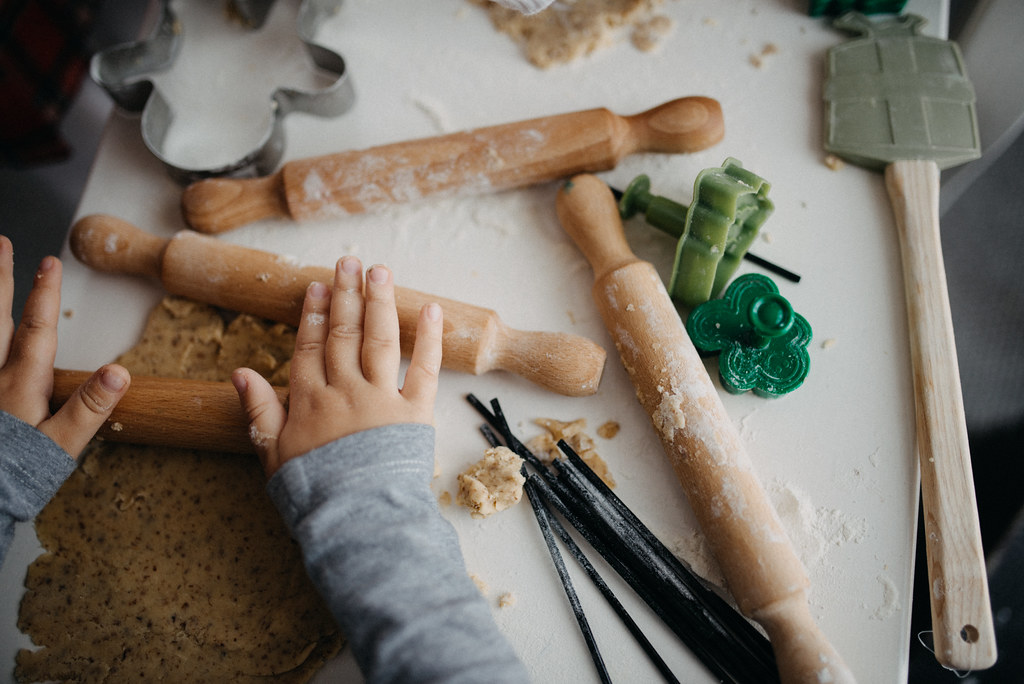
- Cutting shapes from dough with cookie cutters, without eating the raw dough
Tools that help: a small colander they can hold, big simple cookie cutters, a child-size apron.
Try: berry yoghurt pots. Rinsing the berries is exactly this age’s job.
Ages 3 to 5
- Mixing batters, like pancake batter
- “Painting” oil onto bread or vegetables with a pastry brush
- Cracking eggs into a bowl, then washing hands
- Mashing potatoes
Tools that help: a heavy mixing bowl that won’t skid, a silicone pastry brush, a potato masher.
Try: banana pancakes: mashing bananas, cracking eggs and stirring the batter.
Ages 5 to 7
Most children this age have the fine motor skills for more detailed work, though they still need food-safety reminders. The Academy suggests:
- Scooping out an avocado that an adult has halved
- Loading the dishwasher
- Shucking corn and rinsing it
- Snipping herbs or spring onions with clean, blunt kitchen scissors
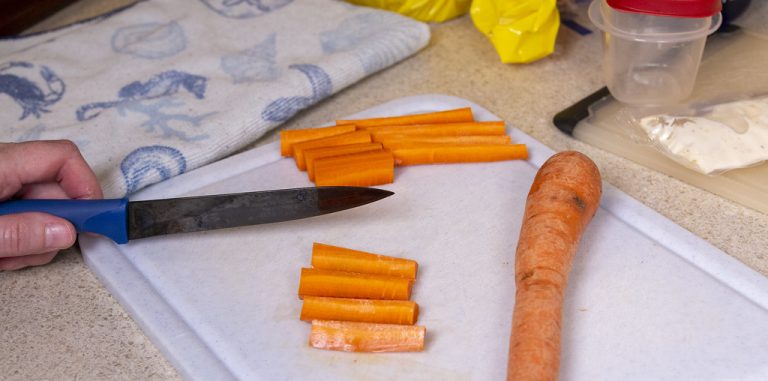
Tools that help: blunt-tipped scissors kept for the kitchen and, for keen cutters, a nylon knife for soft food. See our kid-safe knives guide.
Try: giant couscous salad, with parsley or mint to snip.
Ages 7 to 9
There’s a wide range of skill in this group, so match the job to the child. The Academy suggests:
- Opening cans with a can opener
- Putting leftovers into shallow containers and into the fridge within two hours (one hour if it’s hotter than 90°F / 32°C)
- Pounding chicken flat on a cutting board, with a separate board for raw meat and hand-washing afterwards
- Beating eggs
- Checking meat with a food thermometer
- Peeling potatoes, ginger and mangoes with a peeler
Tools that help: a Y-shaped peeler, a digital food thermometer, and colour-coded chopping boards so raw meat always goes on the same one.
Try: scrambled eggs on toast for beating eggs, and our temperature chart for thermometer practice.
Ages 9 to 12
Most can work fairly independently, but still with an adult nearby. Before handing over grown-up jobs, the Academy suggests checking they can turn pan handles in over the counter so they won’t be knocked, unplug appliances, and use knives, the oven and the microwave safely. Then, with supervision:
- Boiling pasta
- Using the microwave
- Following a recipe step by step, measuring accurately
- Baking in the oven
- Simmering on the hob
- Slicing and chopping vegetables
Tools that help: their own knife and board (see kid-safe knives), oven gloves that fit smaller hands, a digital scale, a kitchen timer, and a cookbook of their own (ideas in gifts for kids who love to cook).
Try: simple bolognese, vegetable stir-fry or easy bread rolls.
Standing at the counter
Toddlers want to see what’s going on. Kitchen “learning towers” solve that, but 11 models have been recalled in the US since March 2025 for tipping over, collapsing or trapping children. Read what the learning tower recalls mean before you buy one. The simpler answer is to bring the job down to a child-height table.
A starter kit
Ages 2 and up
A child-size apron
Good for: every age, from the first day
- An adjustable neck strap, so it grows with them
- Machine-washable
Ages 2 to 5
Big, simple cookie cutters
Good for: the first cutting job most toddlers can do
- One-piece cutters with no small parts
- Dishwasher-safe
Ages 3 to 5
A silicone pastry brush
Good for: “painting” oil, milk or egg wash
- One-piece silicone head, so no bristles come loose
- A short handle for small hands
Ages 7 to 9
A Y-shaped peeler
Good for: peeling potatoes, carrots and mangoes
- A comfortable, chunky grip
- A blade guard for storage
How we put this together: from published guidance (linked where it is used) and the makers’ own descriptions of their products, checked on 24 September 2026. We have not tested these products ourselves and don’t claim to have. Each suggestion comes with what to check before you buy, because the right choice depends on your child.