As an Amazon Associate, KitchenWithMommy.com earns from qualifying purchases.
Bread rolls are the best possible first baking project with children: the dough is forgiving, kneading is genuinely fun, and the result is obviously worth eating.
How to tell when you have kneaded enough
“Knead for ten minutes” is unhelpful because it depends how hard you work. Use the windowpane test instead: tear off a piece of dough and stretch it gently between your fingers. If it stretches thin enough to see light through without tearing, the gluten is developed.
If it tears immediately, keep going for another two or three minutes and test again. A child can do most of this; the test itself is the interesting part for them.
Warm water, not hot
Yeast is a living thing. Water that feels comfortably warm on the inside of your wrist — around body temperature — is right. Hot water kills it, and dough that never rises is almost always this.
If your kitchen is cold, the rise will take longer. That is fine; go by the dough roughly doubling in size, not by the clock.
Soft crust or crisp crust
You choose, and it is a single step at the end:
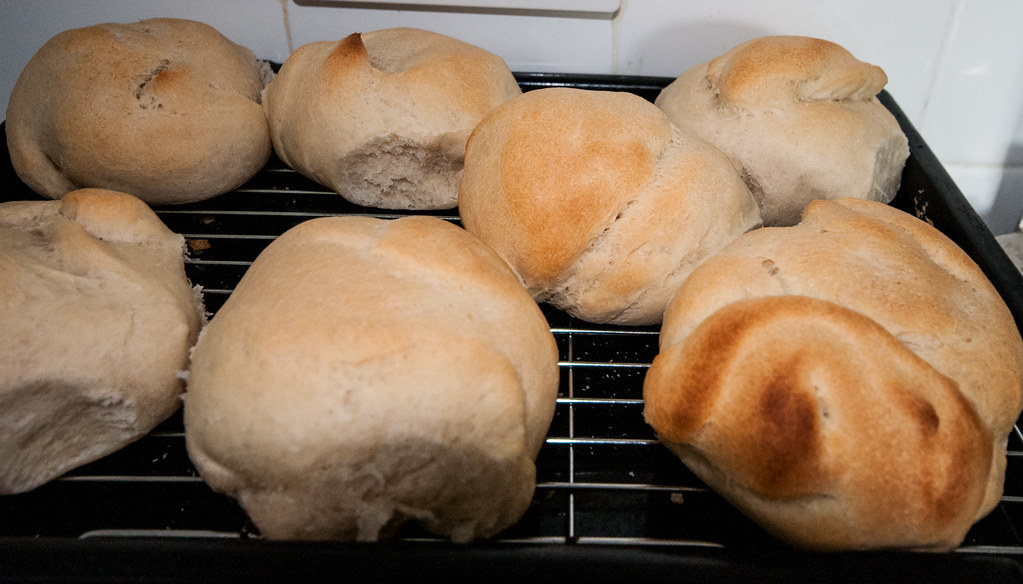
- Soft — brush the hot rolls with milk or melted butter as they come out of the oven, and cover them with a clean tea towel while they cool. Steam softens the crust. This is what you want for a lunchbox.
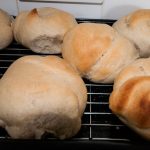
- Crisp — leave them uncovered on a wire rack.
Tapping the base
The old test still works. Tip a roll over and tap the bottom: a hollow sound means it is baked through, a dull thud means it needs a few more minutes.
Freezing
Freeze completely cooled rolls in a bag for up to three months. Defrost at room temperature, or split and toast from frozen. Homemade bread without preservatives stales fast, so freezing what you will not eat the same day is not optional if you want them to be good.
Where to go next
- Classic scones
- Homemade pizza with kids — the same dough skills
- Grilled cheese sandwich