As an Amazon Associate, KitchenWithMommy.com earns from qualifying purchases.
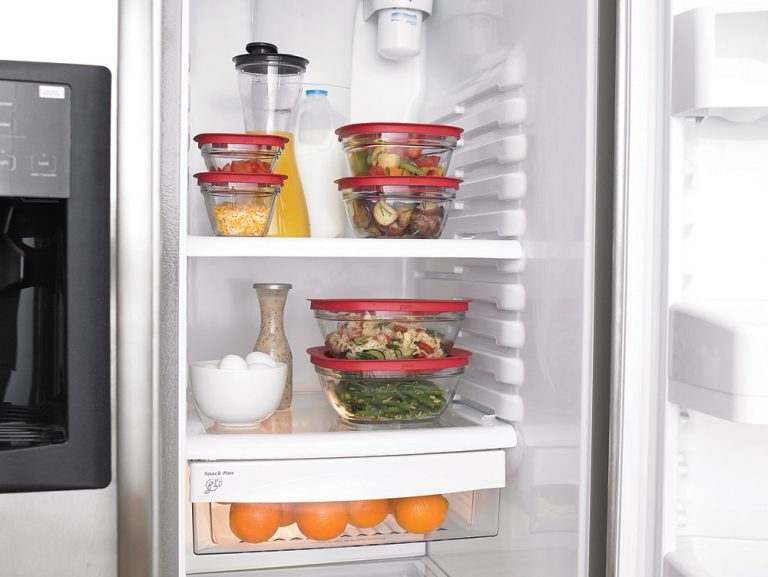
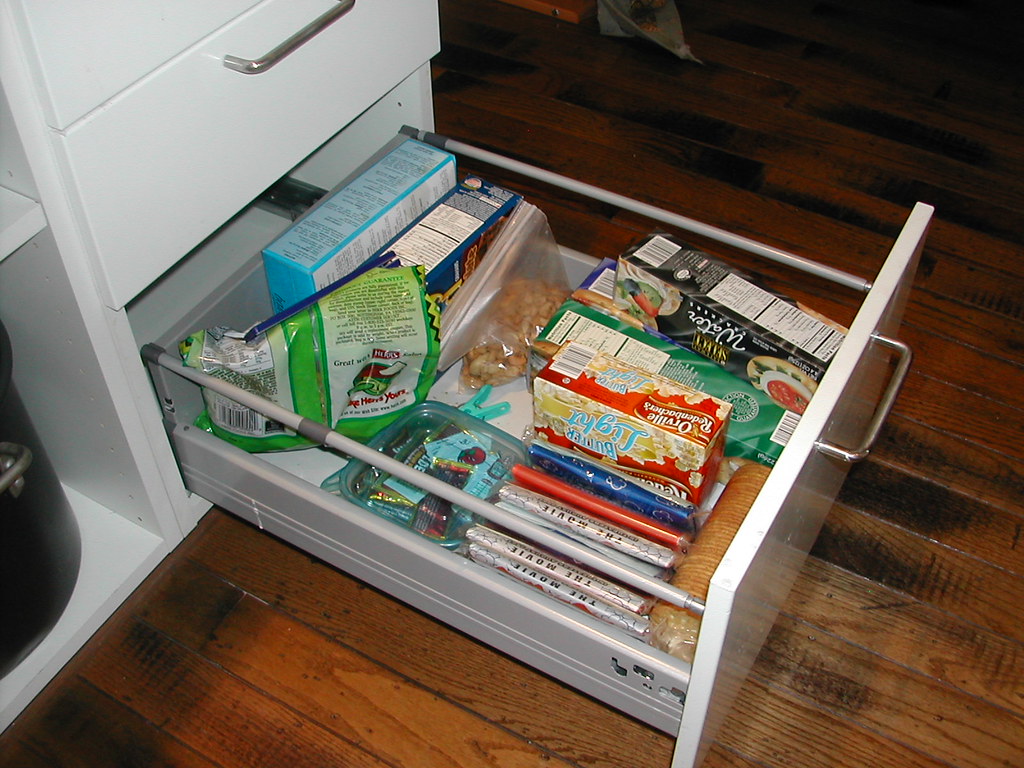
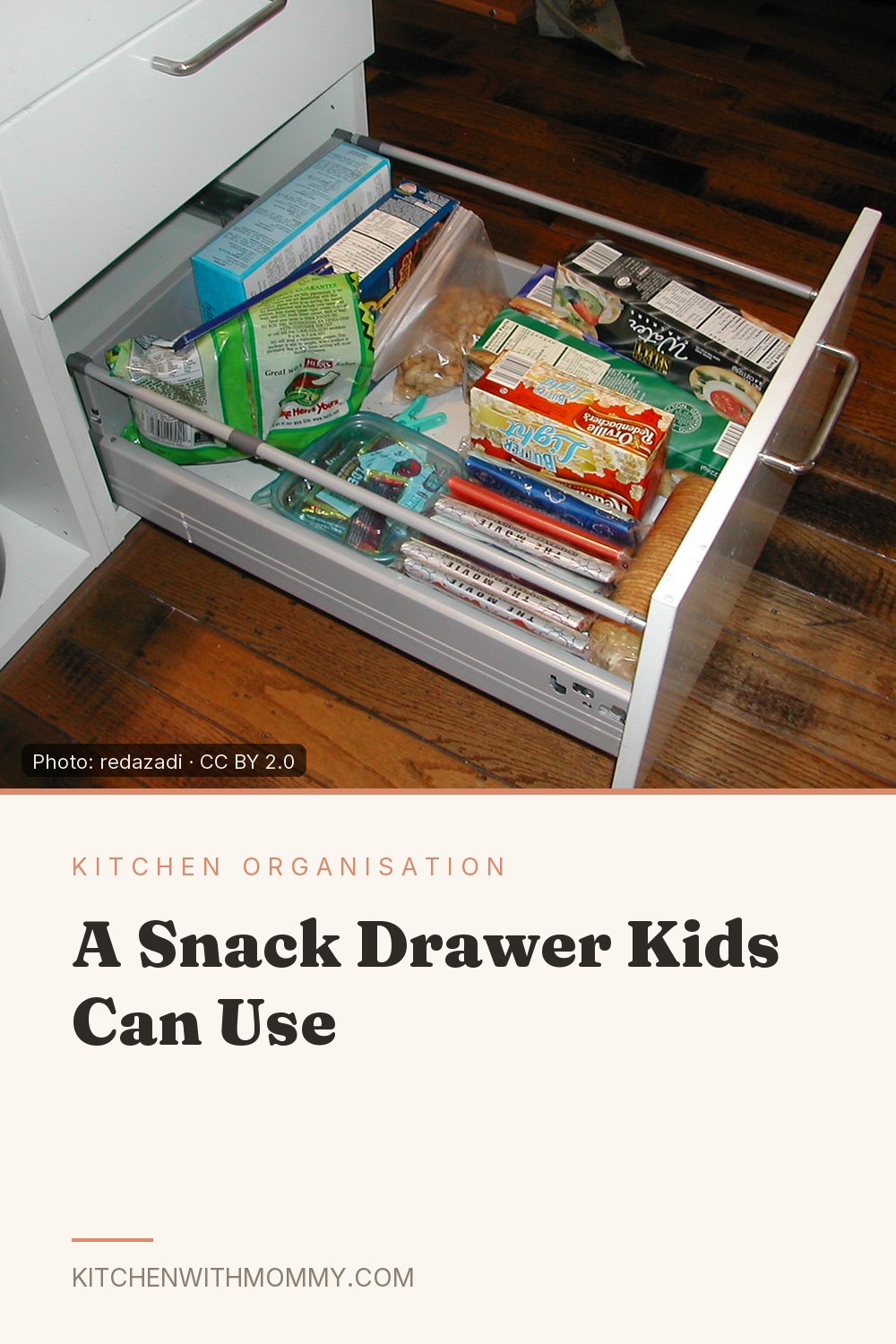
A snack drawer is one low drawer, and ideally one fridge shelf, stocked with snacks you are happy for your children to choose from themselves. It cuts down the stream of “can I have something?”, gives children a bit of independence, and means the answer is already decided.
Stock it with things you’d say yes to anyway
The drawer only works if everything in it is something you are happy to see eaten. If it is full of treats, it becomes a negotiation all over again.
| In the drawer | On the fridge shelf |
|---|---|
| Crackers, breadsticks, rice cakes | Cheese portions, yoghurts |
| Small boxes of raisins | Cut fruit and vegetable sticks in clear pots |
| Portions of homemade granola | Berry yoghurt pots |
| A muffin or slice of banana bread (thawed from the freezer) | Hummus with a portion of crackers |
Anything perishable belongs on the fridge shelf, not in the drawer: cut fruit, cheese and yoghurt need to stay cold.
Rules that make it work
- A time, not a free-for-all. For example, one choice after school and one in the afternoon. Children know the rule, so there is less arguing.
- One item per visit. Pre-portioned packs make “one” easy to see.
- Restock on a fixed day, say Sunday. When it is empty, it is empty until then.
- Let them help restock. It is a good job for children, and they learn what is in the house.
For younger children
If toddlers can reach the drawer, stock it for them. The American Academy of Pediatrics lists nuts and seeds, popcorn, hard, gooey or sticky sweets, whole grapes, marshmallows and chunks of cheese among the foods to avoid or modify for young children because of choking risk (AAP). Keep those for older children, on a higher shelf.
Make sure any food a small child eats is eaten sitting down and supervised, not wandering about with it.
Making it look inviting
- Clear boxes or drawer dividers, so everything is visible at a glance.
- Picture labels for children who can’t read yet.
- A small bin nearby for wrappers, which saves you finding them under the sofa.