As an Amazon Associate, KitchenWithMommy.com may earn from qualifying purchases.
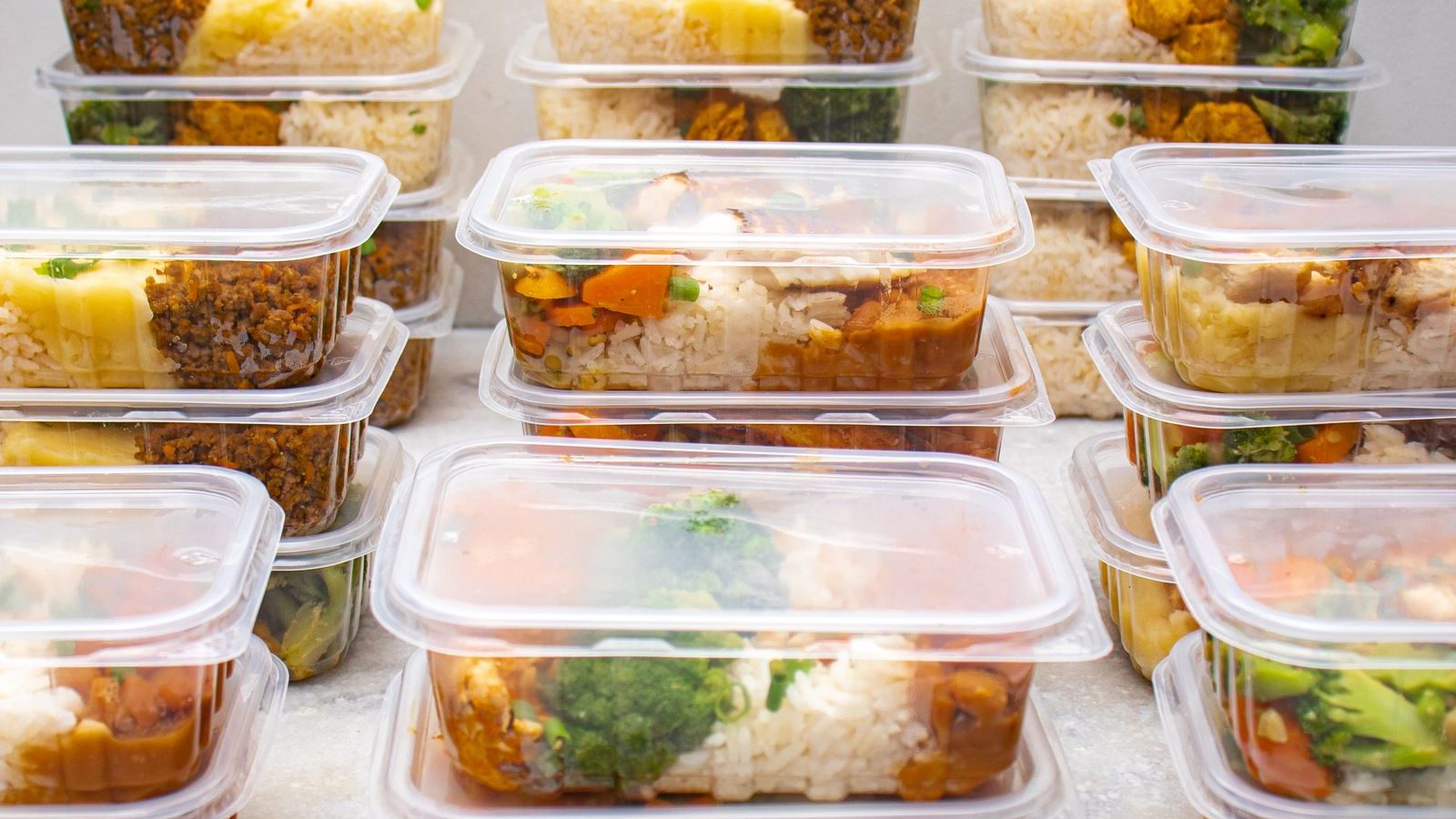
Most meal prep advice produces five identical containers of chicken and rice, eaten with diminishing enthusiasm until Thursday, when someone orders a takeaway. It fails because it prepares meals. Meals get boring, and a plan that assumes you know on Sunday what you’ll want on Thursday is a plan that breaks.
Preparing components works better. You cook the slow parts once and assemble fast, different dinners from them all week.
The idea in one table
| Cook once | Becomes |
|---|---|
| A tray of roast chicken thighs | Wraps, rice bowls, pasta, couscous salad, lunchbox filler |
| A big pot of rice | Bowls, fried rice, stuffed peppers, rice salad |
| Roasted tray of vegetables | Couscous salad, pasta, frittata, side dish |
| A jar of tomato sauce | Pasta, pizza base, meatballs, shakshuka |
| Washed and cut raw vegetables | Every lunchbox, every dinner side, snacks |
Five components, fifteen or more dinners. Nothing repeats exactly, and no decision has to be made before it’s needed.
The two-hour Sunday
If you have a proper window, this order keeps everything running at once rather than in sequence.
- Oven on first. Chicken thighs on one tray, chopped vegetables on another. Both go in and are left alone.
- Big pot on. Rice, or pasta, or a pot of lentils.
- While those run: wash and cut the raw vegetables. This is the least exciting job and the one that pays back every single day.
- Sauce on the hob. Tinned tomatoes, garlic, olive oil, salt, twenty minutes.
- Bake something for lunchboxes. Banana oat muffins go in as the trays come out.
- Cool, then pack. Cool before lidding — see the timing note below.
The forty-minute version
Most weeks won’t give you two hours. If you only do three things, do these:
- Wash and cut the raw vegetables.
- Cook one big carbohydrate — rice or pasta.
- Roast one tray of protein.
That alone removes the slowest step from four weeknight dinners.
Cooling and storing, properly
This is the part that is easy to get wrong and worth getting right. The USDA advises refrigerating perishable food within two hours of cooking — one hour if the room is above 90°F (32°C) — and dividing large amounts into shallow containers so they cool quickly.
Practical version:
- Spread hot food out rather than leaving it in a deep pot. A deep pot of rice can sit warm in the middle for hours.
- Get it into shallow containers and into the fridge inside the two-hour window.
- Don’t seal a lid on steaming food — condensation makes everything soggy and slows cooling.
- Label with the date. You will not remember on Wednesday.
For how long each thing keeps once it’s in there, see how long leftovers last.
What not to prep
Some things are worse for having been made in advance, and prepping them is how a system loses people’s trust.
- Dressed salad. Dress at the table. Keep the dressing in a jar.
- Anything fried for crispness. It will be soft by Tuesday.
- Cut apple and banana. Cut them in the morning.
- Fully assembled sandwiches for the whole week. Two days is the sensible limit, and only with dry fillings.
- Avocado. Just don’t.
A realistic week
| Day | Dinner | Built from |
|---|---|---|
| Monday | Chicken and roast veg couscous | Chicken, roast veg |
| Tuesday | Pasta with tomato sauce, cut veg on the side | Sauce, raw veg |
| Wednesday | Rice bowls — chicken, sweetcorn, cucumber | Rice, chicken, raw veg |
| Thursday | Frittata with the last of the roast veg | Roast veg, eggs |
| Friday | Fried rice, or takeaway, without guilt | Rice, whatever is left |
Friday is deliberately loose. A plan with no slack in it is a plan that fails on the first bad day.
Where to go next
- How long leftovers last — the storage timings
- Choosing meal prep containers
- 20 quick toddler dinners — built from these components
- Pantry organisation
- Meal planning calculator