As an Amazon Associate, KitchenWithMommy.com earns from qualifying purchases.
Forgetting to take dinner out of the freezer happens in every house. The instinct is to leave it on the side or put it in hot water. Both are the methods the official guidance tells you not to use. Here is what does work, and how long it takes.
Why not on the counter?
USDA explains it clearly in its guide to safe defrosting: food is safe while frozen, but as soon as the outside warms above 40°F (4°C), bacteria can start to multiply, even while the middle is still frozen solid. So perishable food should never be thawed on the counter or in hot water, and should not sit at room temperature for more than two hours.
The three safe ways
| Method | How long | Then |
|---|---|---|
| In the fridge | Plan ahead: about a day even for 1lb (450g) of mince or chicken breasts; about 24 hours per 5lb for a turkey | The safest and least effort. See the “how long after” section below |
| In cold water | About an hour or less for 1lb (450g); 2 to 3 hours for 3 to 4lb | Cook straight away |
| In the microwave | Minutes, on the defrost setting | Cook immediately: parts may already have started to cook |
Fridge
Put the food in a container or on a plate big enough to catch drips, on the bottom shelf, so thawing juices cannot drip onto anything else. The FSA’s guidance says the same, and it is the habit that stops raw meat juice getting into the salad drawer.
Cold water
The food must be in a leak-proof bag. Submerge it in cold tap water and change the water every 30 minutes so it keeps thawing. Not hot water, which warms the outside into the danger zone.
Microwave
Use the defrost setting, then cook the food straight away. USDA explains that the edges can warm up and start cooking during thawing, so it should not be left sitting afterwards.
How long after defrosting?
This is where US and UK advice differ:
- UK (FSA): use food within 24 hours of it being fully defrosted.
- US (USDA): after thawing in the fridge, mince, stewing meat, poultry and seafood keep another 1 to 2 days; beef, pork or lamb joints, chops and steaks 3 to 5 days.
If you want one rule for a busy house, the 24-hour UK rule is the simpler and more cautious one.
Can you cook from frozen?
USDA says yes: it is safe to cook food from frozen, and it takes roughly 50% longer. The FSA’s caution is about food that is partly defrosted, which may not cook evenly, leaving a cold centre where bacteria survive.
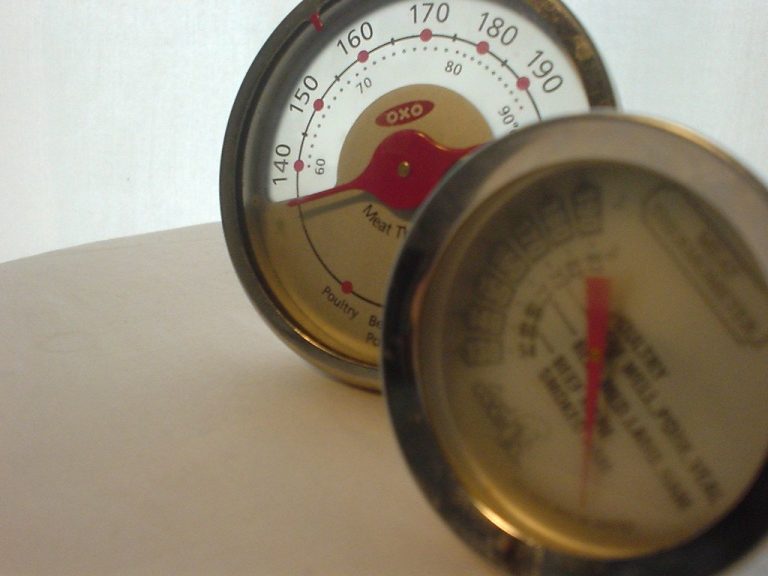
In practice: thin or small things, such as mince going straight into a pan, frozen fish fillets or frozen vegetables, cook well from frozen. For large pieces such as joints or whole birds, defrost fully first, and check the centre with a thermometer either way.
Refreezing
- Food thawed in the fridge can be refrozen without cooking, according to USDA, though it may lose some quality.
- Food thawed in cold water or the microwave should be cooked before it is refrozen.
- Once cooked, food can be frozen again, but the FSA says you should then only reheat it once.
Freeze it so it defrosts easily
The FSA’s tip is the one that helps most: freeze in individual portions so you only defrost what you need. Flat bags of mince or sauce thaw far faster than a solid block. Our family freezer guide covers packing and labelling.
Where to go next
- What freezes well (and what doesn’t)
- Safe cooking temperatures
- How to organise your fridge
- Simple bolognese, a good one to cook from frozen mince