As an Amazon Associate, KitchenWithMommy.com earns from qualifying purchases.
Most lunchbox advice assumes the problem is ideas. Usually it isn’t. A lunch comes home untouched for three boring reasons: there wasn’t enough time to eat it, it was hard to open, or it had gone warm and soft by the time the bell went.
This guide is the system we use to plan lunches around those three constraints. If you only read one section, make it the twenty-minute problem — it explains more failed lunches than anything else.
Start with how long they actually get to eat
Ask your school how long the lunch period is, and how much of it is spent queuing, washing hands and sitting down. Many primary schools run a 30-minute lunch block that leaves 10–15 minutes of actual eating time, and children are watching their friends head outside for the rest of it.
Once you know the real number, pack for it:
- Under 15 minutes of eating time: one main item plus two or three things that need no work. Nothing that has to be peeled, unwrapped twice, or assembled.
- 20 minutes or more: you have room for a component lunch — crackers, cheese, cold meat or beans, fruit — that they put together themselves.
A useful test: put the packed box in front of your child at home and time how long it takes them to get through it without being hurried. If it takes twenty minutes at the kitchen table, it will not be finished at school.
Build the box in five slots, not five recipes
Thinking in slots is faster than thinking in meals, and it stops the same three lunches repeating all term.
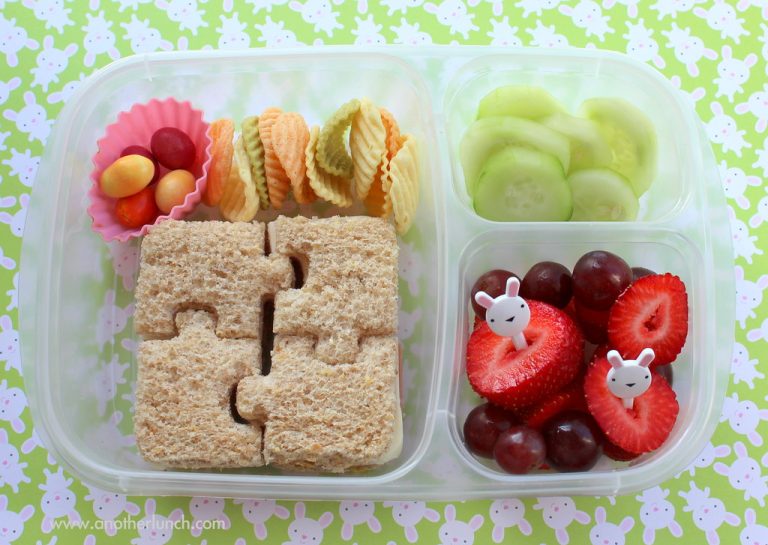
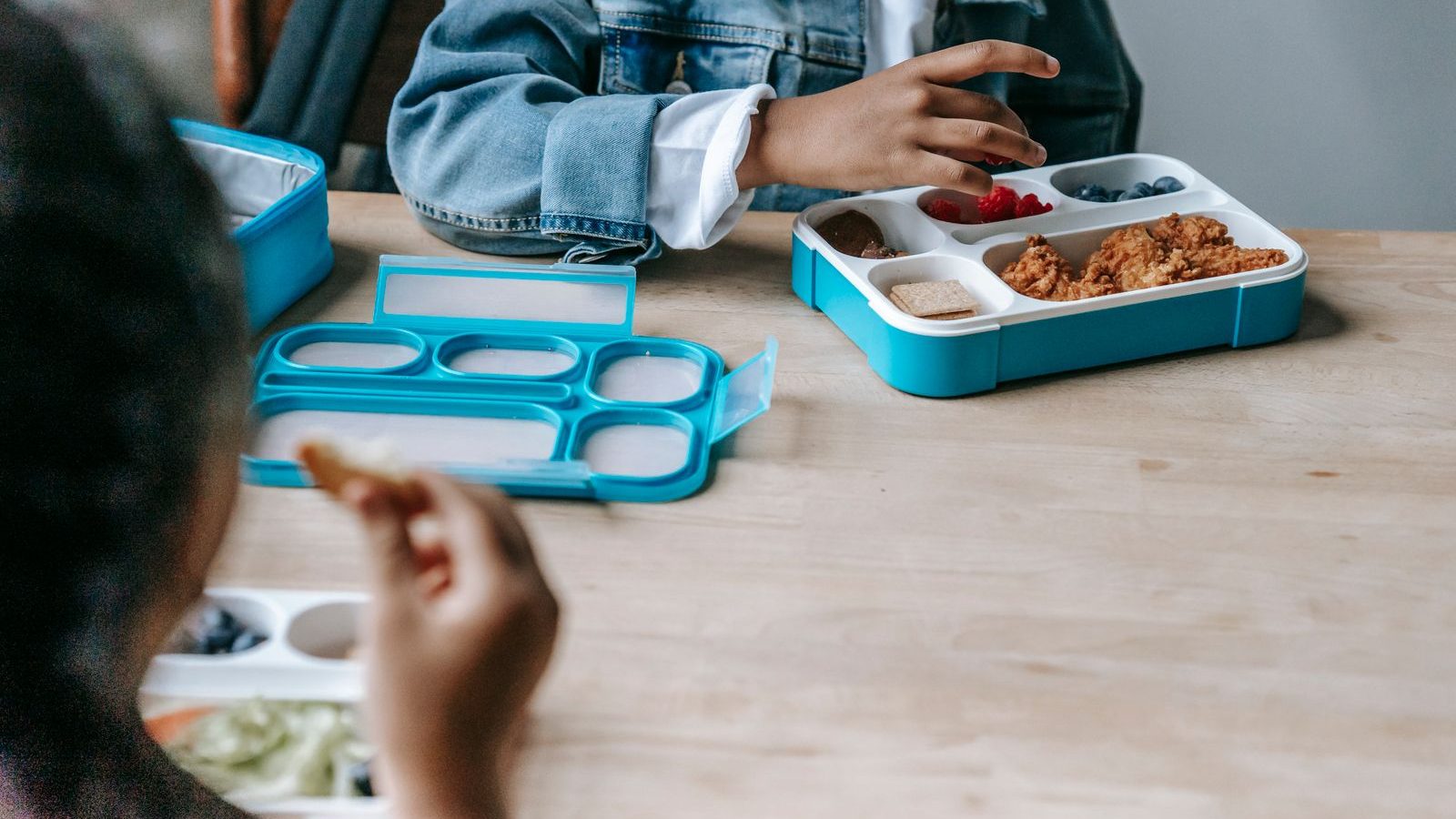
- Something substantial. Sandwich, wrap, pasta salad, rice, last night’s leftovers, or crackers with a protein.
- Something crunchy. Cucumber, pepper strips, carrot sticks, snap peas, apple slices.
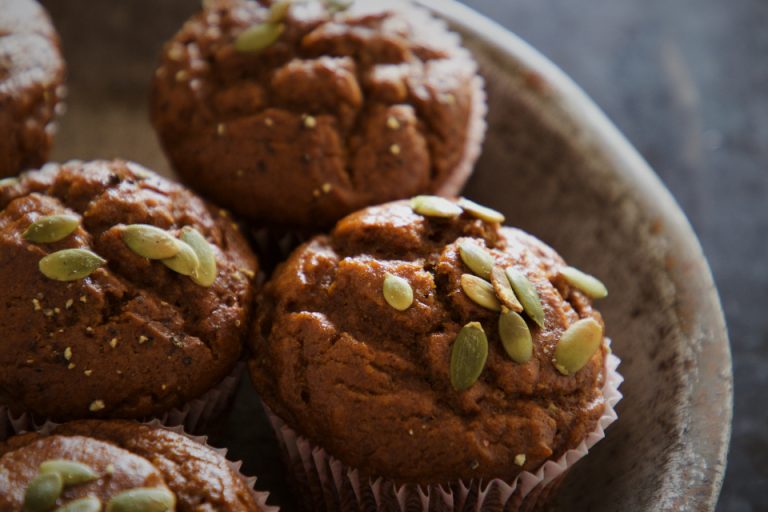
- Something sweet but not a dessert. Grapes, berries, melon, a small muffin.
- Something they reliably eat. This is the anchor. It is not a failure to pack the same yoghurt tube every day.
- Something to drink. Water in a bottle they can open one-handed.
Two slots can be leftovers. One slot should always be the anchor. If you are short on time, the crunchy slot is the one to drop, not the anchor.
The three fixes that change the most
1. Test every lid at home
A child who cannot open a container does not ask for help in a noisy dining hall — they put it back in the bag. Before term starts, hand your child every pot, bottle and wrapper you plan to use and watch them open it with cold hands and no table. Anything that needs an adult grip gets retired.
This is the single biggest reason we suggest trying lids before buying in bulk. Our guide to choosing a kids lunchbox covers what to look for in a latch, and the lunchbox category page lists the main types side by side.
2. Keep it cold, properly
Warm sandwiches get rejected, and food kept for hours between 40°F and 140°F (4°C and 60°C) is in the range the USDA calls the danger zone. A lunch packed at 7am and eaten at 12:30pm has had five and a half hours to drift.
Two ice packs, not one, and an insulated bag rather than a cloth tote makes a real difference. We go through the detail in how to keep a packed lunch cold until lunchtime.
3. Separate wet from dry at packing time
Soggy is the most common complaint we hear and the easiest to design out. Dressings and dips travel in their own small pot. Tomato and cucumber go beside the sandwich, not inside it. Anything with a sauce sits in a compartment with a raised divider rather than a flat tray.
What to prep ahead, and what not to
Prepping everything on Sunday sounds efficient and produces a Thursday lunchbox nobody wants. Prep the things that hold, and leave the things that don’t.
| Prep on Sunday | Prep the night before | Pack in the morning |
|---|---|---|
| Muffins and flapjacks (freeze them) | Sandwiches without wet fillings | Anything with dressing |
| Washed and cut hard vegetables | Pasta or rice salad | Sliced apple and banana |
| Hard-boiled eggs | Portioned crackers and cheese | Yoghurt and anything frozen |
| Batch-cooked pasta | Filled water bottle in the fridge | The ice packs |
Hard-boiled eggs keep about a week in the fridge in their shells; cut fruit is better within three or four days. The USDA’s cold food storage chart is the reference we use for anything we are unsure about.
When lunches keep coming home full
Before changing the food, check the mechanics. In our experience the order to work through is:
- Could they open everything? (Test at home.)
- Did they have time? (Ask how many minutes they actually sat down.)
- Was it still cold? (Feel the box when it comes back.)
- Were they sitting with friends who eat, or friends who play?
- And only then — is it the food?
If it turns out to be the food, that is a different problem with a different solution. Our guide to feeding a picky eater covers the approaches that tend to help, and what to stop doing.
Where to go next
- 30 no-heat school lunch ideas — the slot system, filled in
- Banana oat muffins — one freezer batch covers a fortnight
- Keeping a packed lunch cold — ice packs, timing and insulation
- Choosing a lunchbox — what actually matters in a box
- Lunchbox Builder — put a week together in a few minutes