As an Amazon Associate, KitchenWithMommy.com may earn from qualifying purchases.
Lunchboxes are a category where the marketing and the daily reality diverge sharply. A box can be leakproof, dishwasher-safe and beautifully photographed, and still come home full every day because a six-year-old cannot open it.
How we put this together: this guide is built from manufacturer specifications, published materials standards and recurring themes in owner feedback. We have not run a controlled test of competing lunchboxes, and we don’t claim to have. What follows is a decision framework, not a ranking.
The five criteria, in order of how much they matter
1. Can your child open and close it unaided?
This outranks everything else. The failure mode is silent: a child who can’t work a latch doesn’t ask a lunchtime supervisor, they put it back in the bag and say they weren’t hungry.
What to look for:
- Clip latches — easier for small hands than compression seals, but the plastic tab is the part that snaps. Check whether replacements are sold.
- Screw lids — poor for young children, fine from about eight.
- Silicone-gasket press lids — the most leak-resistant and often the hardest to open. Good for an older child, frustrating for a four-year-old.
- Zips — usually the easiest of all, which is why soft bags suit the youngest children.
If you can, have your child try the mechanism before you commit to it. If you’re buying online, buy one rather than a set.
2. What kind of seal do you actually need?
“Leakproof” is used loosely. In practice there are three levels, and paying for the top one when you don’t need it usually costs you ease of opening.
| Seal type | Holds | Trade-off | Best for |
|---|---|---|---|
| No gasket, snap lid | Dry food only | Nothing wet, ever | Sandwich-and-crackers lunches |
| Single outer gasket | Damp food; compartments leak into each other | Yoghurt still migrates | Most primary-age lunches |
| Per-compartment gaskets | Wet food kept separate | Stiffest to open; most to clean | Dressings, dips, yoghurt |
A useful middle path: a single-gasket box plus one small screw-top pot for anything wet. Cheaper, easier to open, and easier to wash.
3. Compartment depth, not compartment count
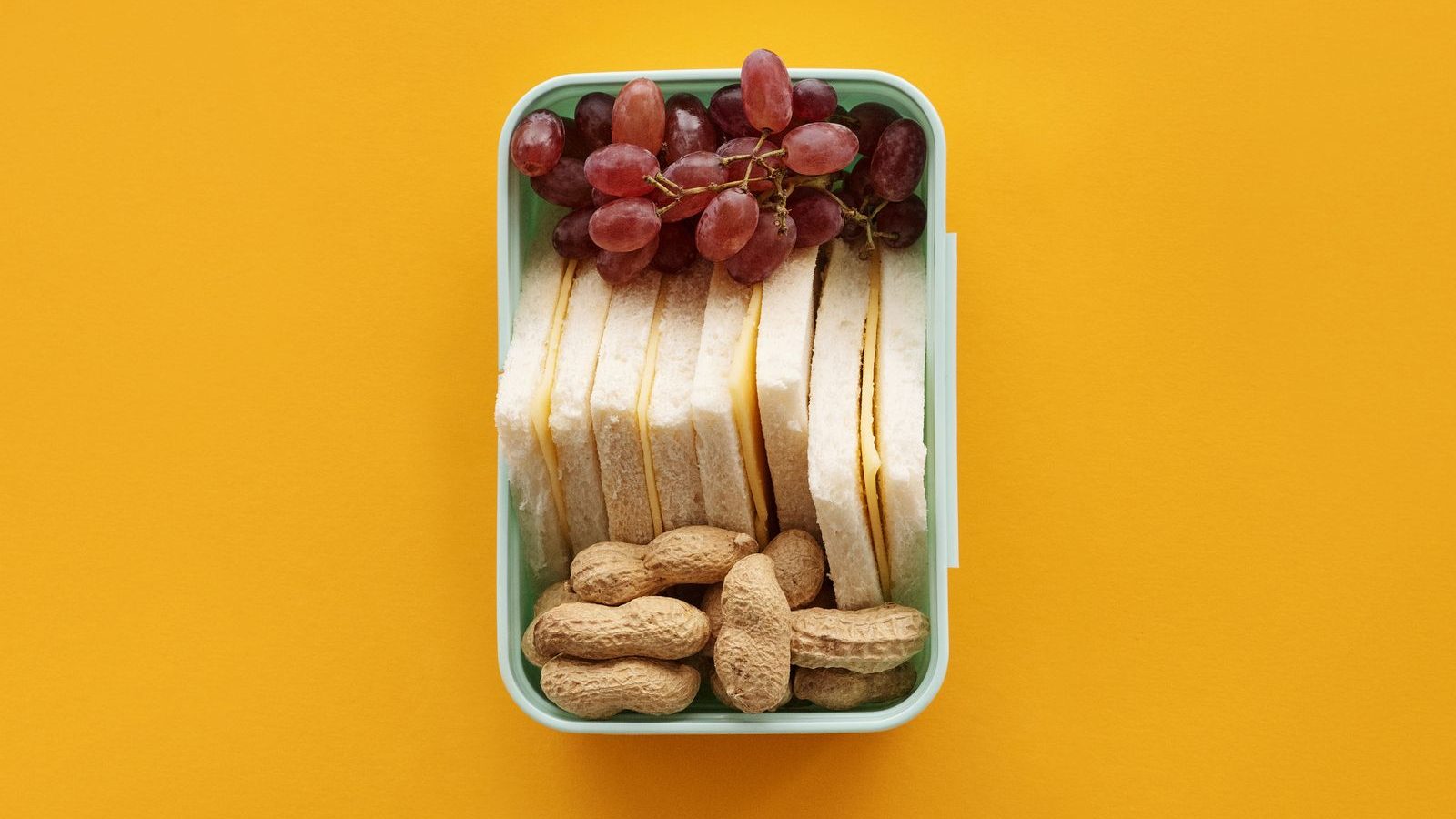
Boxes are usually sold on how many sections they have. Depth matters more. Very shallow trays look neat in product photos but won’t hold a normal sandwich without squashing it, and a squashed sandwich comes home.
Before buying, measure the sandwich your child actually eats — a round of standard sliced bread cut in half is roughly 4.5 x 4.5 inches (11 x 11 cm) and about an inch (2.5 cm) thick — and check it against the listed internal dimensions rather than the external ones.
4. How it cleans
This is the criterion people regret ignoring. Things to check on the listing:
- Is the gasket removable? Fixed gaskets trap food and eventually smell.
- Top rack only, or full dishwasher? Most plastic and silicone is top rack only.
- Are there internal corners a sponge can’t reach?
- Are replacement gaskets and clips available, or is a broken clip the end of the box?
5. Size and weight, with the bag in mind
Check the box fits the school bag your child already has, and weigh it empty if the listing gives a figure. Stainless steel boxes are durable and dent rather than crack, but a heavy box plus a full water bottle is a lot for a small child to carry.
Which style suits which age
| Style | Suits | Main advantage | Main limitation |
|---|---|---|---|
| Soft insulated bag | Nursery to about 6 | Zips are easy; holds cold well | Contents get squashed |
| Hard-shell bento, single gasket | 5 and up | Protects food; portions visibly | No insulation on its own |
| Bento with per-compartment seals | 8 and up | Wet food stays put | Stiff latches; more washing |
| Stainless steel tiffin | 7 and up | Very durable; no plastic taint | Heavy; rarely fully leakproof |
| Thermos food jar | 6 and up | Hot food at school | Must be pre-heated to work |
What we can’t tell you from a listing
Being straight about the limits of specification-based research:
- How long a latch lasts. Nobody publishes a cycle count. Owner reviews after six months are the closest signal available.
- Whether a gasket will hold after fifty dishwasher runs. Silicone hardens with heat over time; how fast varies.
- Real insulation performance. “Keeps food cold for hours” is not a measured claim. Assume you need ice packs regardless — see keeping a packed lunch cold.
Questions we get asked
Is stainless steel worth it?
If durability is the priority and the weight is acceptable, it lasts well and doesn’t stain or hold smells. It is rarely as leak-resistant as a gasketed plastic box, so pair it with a separate pot for anything wet.
Do I need a separate water bottle?
Almost always, yes — built-in bottles reduce the food space and are usually the first part to leak. See kids water bottles.
How many should I buy?
Two, once you’ve found one that works. One is in the dishwasher while the other is packed. Don’t buy two until your child has used the first one for a fortnight.