
As an Amazon Associate, KitchenWithMommy.com earns from qualifying purchases.
Where a toffee apple is hard and glassy, a caramel apple is soft and chewy, and the caramel is made with butter and cream. They are the American Halloween classic, usually rolled in chopped nuts, and easier to eat than toffee.
Cook the caramel far enough to set
Undercooked caramel is delicious and useless: it slides straight off the apple into a puddle. For caramel that sets on the apple but stays chewy, cook it to 115 to 118C (240 to 245F), known as the firm-ball stage.
Then let it cool for a few minutes before dipping. Caramel straight off the heat is too thin to cling. As it thickens slightly it coats in one smooth layer.
Prepare the apples properly
As with toffee, the wax has to come off: pour just-boiled water over the apples, scrub, then dry them completely. Caramel will not stick to wax or to a damp skin. Chill the dried apples for 20 minutes before dipping, and the caramel sets faster.
Make them the day you will eat them
This part matters. In 2014, a US outbreak of listeria was linked to commercially made, prepackaged caramel apples; the CDC reported 35 people ill in 12 states, 34 of whom were taken to hospital (CDC outbreak report).
Researchers at the University of Wisconsin then found out why. Pushing a stick into an apple draws juice out to where the apple meets the caramel, and at room temperature bacteria grew there quickly: within three days in their tests. Refrigerated apples without sticks showed no growth (Glass et al., 2015).
At home, that means: wash and dry the apples well, make caramel apples on the day you plan to eat them, and put any leftovers in the fridge rather than leaving them out.
Toppings, including nut-free ones
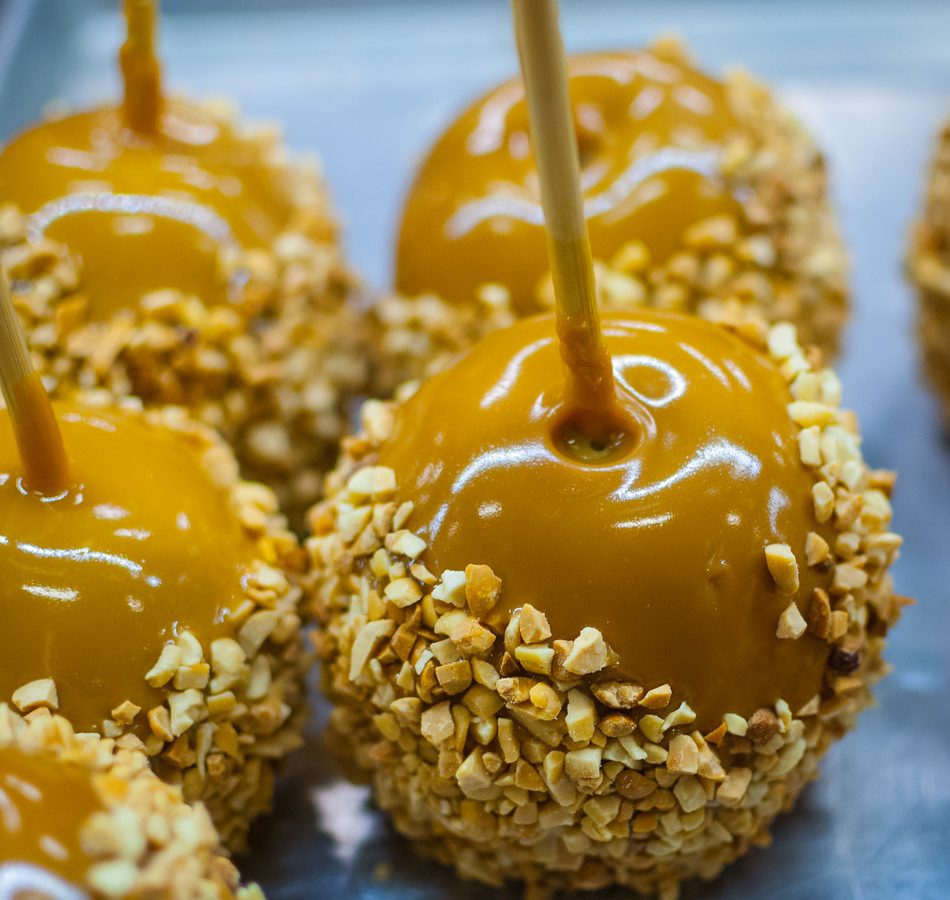
Chopped roasted peanuts are the traditional finish, as in the photograph. For a nut-free version, which matters for school events and many parties, roll them in sprinkles, crushed biscuits or mini chocolate chips instead.
Caramel is sticky and apples are firm, and the American Academy of Pediatrics lists both sticky candy and raw apple pieces as choking risks for young children (AAP). For little ones, slice the apple and drizzle a little caramel over the slices instead.